


Tatura Who's Who
Public Profile
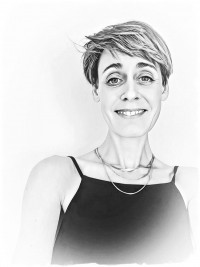
who particularly enjoys working to address and maintain the reduction or elimination of chronic pain and inflammation, improving mobility and posture, when all other approaches have otherwise ceased to give a solution.
Fascial Dynamic Bowen Therapy
Working with Trigger Points, Acupuncture sites, Fascial Meridians and the latest research in Traditional Chinese Medicine (TCM) Bowen Therapy has a positive effect on muscles, nerves, joints, organ systems and other organic complaints. A treatment can include designated wait times between moves giving the body opportunity to promote homeostasis of the body tissues and systems.
Available for mobile home visits or clinic location
Connect through my public pages
Public information provided by this member.
Share this Portrait
Distinguished and Famous people from Tatura
🎨 Ludwig Hirschfeld-Mack
Ludwig Hirschfeld-Mack brought the ideas of Germany's Bauhaus art school into Australian art education, following a wartime journey that included internment at Tatura. Born in Frankfurt in 1893, he entered the Bauhaus in 1920 and later taught in Germany, Wales and England. Deportation to Australia was followed by confinement at Hay, Orange and Tatura. In 1942 he became head of art at Geelong Grammar, where his teaching encouraged experimentation across materials and disciplines. The University of Melbourne's collection holds more than 600 of his works, alongside archival material documenting his practice. Tatura was a place of enforced confinement in a life subsequently devoted to creative education.
🗿 Erwin Fabian
Sculptor Erwin Fabian was another refugee artist confined at Tatura after being deported to Australia on the Dunera. He had fled Nazi Germany for London, only to be interned as an enemy alien during the war. Following his release in 1942, he served in the Australian Army, where his artistic skills included illustration and publication design. His later sculpture transformed discarded metal and machinery into abstract forms, giving worn industrial objects a new visual life. Tatura's museum returned to this history with the 2019 exhibition Migration and the Refugee: The Art of Erwin Fabian. He continued making art in Melbourne until his death in 2020, aged 104.
🎼 Werner Baer
Werner Baer brought formidable musical training to an unlikely Australian setting: wartime internment at Tatura. A Jewish musician who had fled Nazi Germany, he reached Australia with his wife and daughter in 1940 and was detained as an enemy alien. At No. 3 Camp he participated actively in music and theatre. Released in 1942 for fruit-picking work at Shepparton, he later served in the Australian army. His subsequent Sydney career embraced broadcasting, composition, choirs and coaching singers. Tatura belongs to the difficult refugee chapter before that public musical life, when creative work continued even inside a camp.
🏫 Harry Heath
Harry Heath was born at Tatura in 1903, the son of a saddler. His schooling took place at Thurgoona and Albury before teacher training in Sydney led to a succession of public-school appointments. He became president of the New South Wales Teachers’ Federation in 1952 and later joined the State’s Public Service Board. A supporter of comprehensive secondary education, he also chaired the committee that led to the Riverina College of Advanced Education in 1971. Tatura is his birthplace; the school leadership, union work and policy disputes that made him prominent belong chiefly to his later New South Wales career.
